
Best CRM for New Real Estate Agents: An Honest Guide to Starting Right
The CRM conversation for new real estate agents is often framed the same way as it is for established producers — long feature comparisons, enterprise platform reviews, and pricing charts that assume you’re already generating consistent lead volume. That framing isn’t particularly useful when you’re 60 days into your license and still building your first pipeline.
New agents have a specific set of needs that change as their business develops. This guide covers what actually matters in a CRM at the early stage, what you can reasonably skip for now, and when upgrading to a full-featured platform starts making sense.
What New Agents Actually Need in a CRM
Before evaluating specific platforms, it helps to be clear about the problem you’re solving at this stage.
The new agent CRM problem:
You have a sphere of influence — family, friends, former colleagues — that represents your most likely early clients. You’re probably also pursuing some form of lead generation, whether that’s cold calling, open houses, social media, or a small paid campaign. The CRM’s job is to help you stay consistently in contact with both groups without letting anyone fall through the cracks while you’re learning the rest of the job at the same time.
What that requires:
What it probably doesn’t require at the early stage:
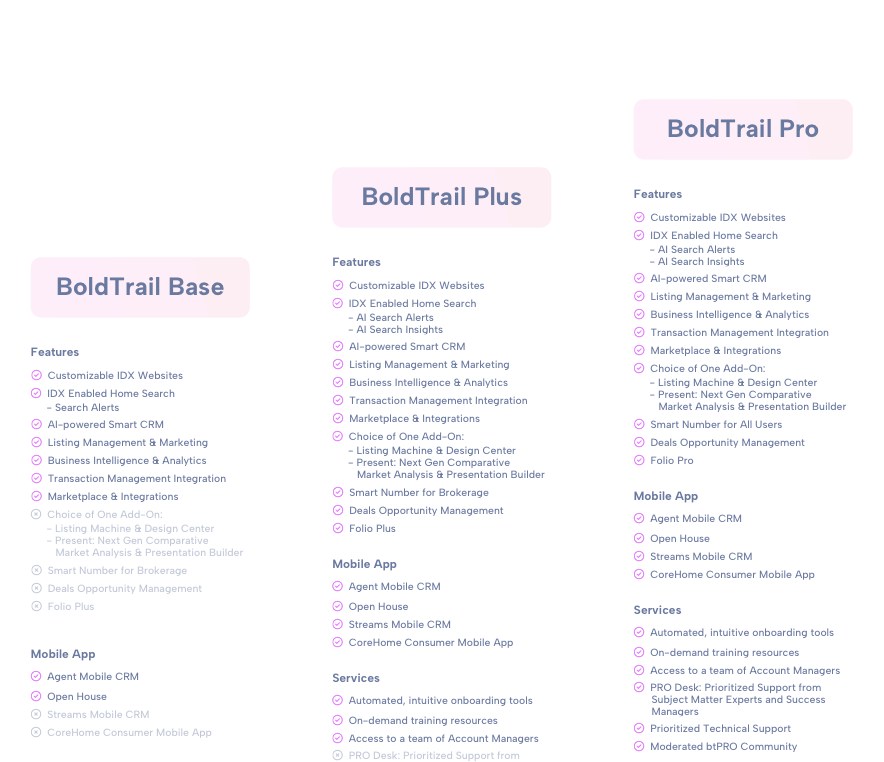
Flexible Packages– Configured Your Way for Your Unique Business.
Which package is right for me?
The Honest Staging Advice
Here’s something most CRM marketing doesn’t say clearly: if you haven’t closed your first few deals yet and you’re still building your pipeline from scratch, starting with a full enterprise platform may create more friction than it removes.
The risk isn’t that enterprise platforms are bad — it’s that the learning curve and configuration requirements of a full-featured system can become a distraction during the stage when your time is better spent on activities that generate clients: calls, open houses, sphere outreach, relationship building. New agents sometimes over-invest in CRM setup before they have the lead volume that makes the automation valuable.
The more practical path for most new agents:
1. Start with a capable but approachable CRM that you’ll actually log into daily — clean contact management, simple follow-up sequences, good mobile access
2. Build the habit of consistent CRM use before adding complexity
3. Upgrade to a full platform like BoldTrail when your lead volume from internet sources, paid campaigns, or IDX traffic justifies the behavioral automation layer
That said — if your brokerage provides BoldTrail access (as eXp Realty does, for example), there’s no reason not to use it from day one. The platform is capable of serving both entry-level needs and high-volume production. The learning curve is real, but the foundation you build in the early stage transfers directly as your business grows.
What BoldTrail Offers for Agents at Any Stage
For new agents who do have access to BoldTrail — either through their brokerage or by choice — here’s where the platform delivers value even in the early stage:
IDX website. Having a professional IDX site from the start gives you a place to send sphere contacts and early leads. It establishes your digital presence and begins capturing behavioral data on anyone who searches your listings — even if you’re not yet at the volume where that data drives sophisticated automation.
Smart campaigns. Pre-built campaign templates reduce the configuration work required to get started. Rather than building drip sequences from scratch, you can activate existing templates and customize as you learn the system.
Mobile app. For new agents who spend most of their time in the field and haven’t established office routines, full CRM access from the phone means you’re not accumulating a backlog of CRM tasks to handle later.
The growth path. The most practical reason to start on BoldTrail early, if you have access, is continuity. Agents who build their database and habits on the platform they’ll use long-term don’t have to migrate data or re-learn workflows when their business scales. The behavioral automation and advanced team tools are there when you’re ready for them — you don’t need to use them on day one.

Q&A: Best CRM for New Real Estate Agents
What is the best CRM for a new real estate agent?
The best CRM for a new agent depends on your stage and lead volume. If you’re focused on sphere development and haven’t yet closed your first deal, prioritize a CRM that’s easy to use daily — clean contact management, simple follow-up sequences, and a good mobile app. If your brokerage provides access to a full platform like BoldTrail, start there and learn the basics while leaving advanced features for when your pipeline volume justifies them.
Should a new real estate agent pay for an expensive CRM?
Not necessarily at the start. The most important thing in the early stage is building the habit of consistent contact management — that habit is more valuable than the platform you build it on. Once you’re generating consistent lead flow from internet sources or paid campaigns, a full platform’s automation layer starts paying back the investment. The question to ask: does my current lead volume justify what this CRM costs? If the answer is no, start lighter and upgrade when the math changes.
Is BoldTrail too advanced for a new agent?
BoldTrail has a learning curve, but it’s not unusable by new agents — especially those whose brokerage provides access. The key is starting with the basics: set up your contact database, activate a few core smart campaigns, and get comfortable with the mobile app. You don’t need to configure every feature from day one. Starting on the platform you’ll grow with means your setup and habits carry forward as your business scales.
What CRM features matter most for a new real estate agent?
At the early stage, prioritize: a contact database that’s easy to maintain, basic follow-up sequences that run without daily manual intervention, a mobile app with real-time lead alerts, and low administrative overhead. Advanced AI behavioral nurturing, complex routing logic, and back-office tools are valuable — but at high lead volume, not at the early stage.
When should a new agent upgrade to a more powerful real estate CRM?
When your lead volume from internet sources — IDX, paid campaigns, social media — exceeds what you can manage manually, behavioral automation starts justifying the investment. That’s typically when an agent is consistently receiving 10–20+ new internet leads per month and needs a system that follows up without requiring manual attention for every contact.
Which Package is Right For Me?
The right CRM for a new agent is the one you’ll actually use — consistently, from the start. If your brokerage gives you BoldTrail access, use the platform overview to understand where to start. If you’re choosing independently, connect with the team to understand what setup looks like at your stage.