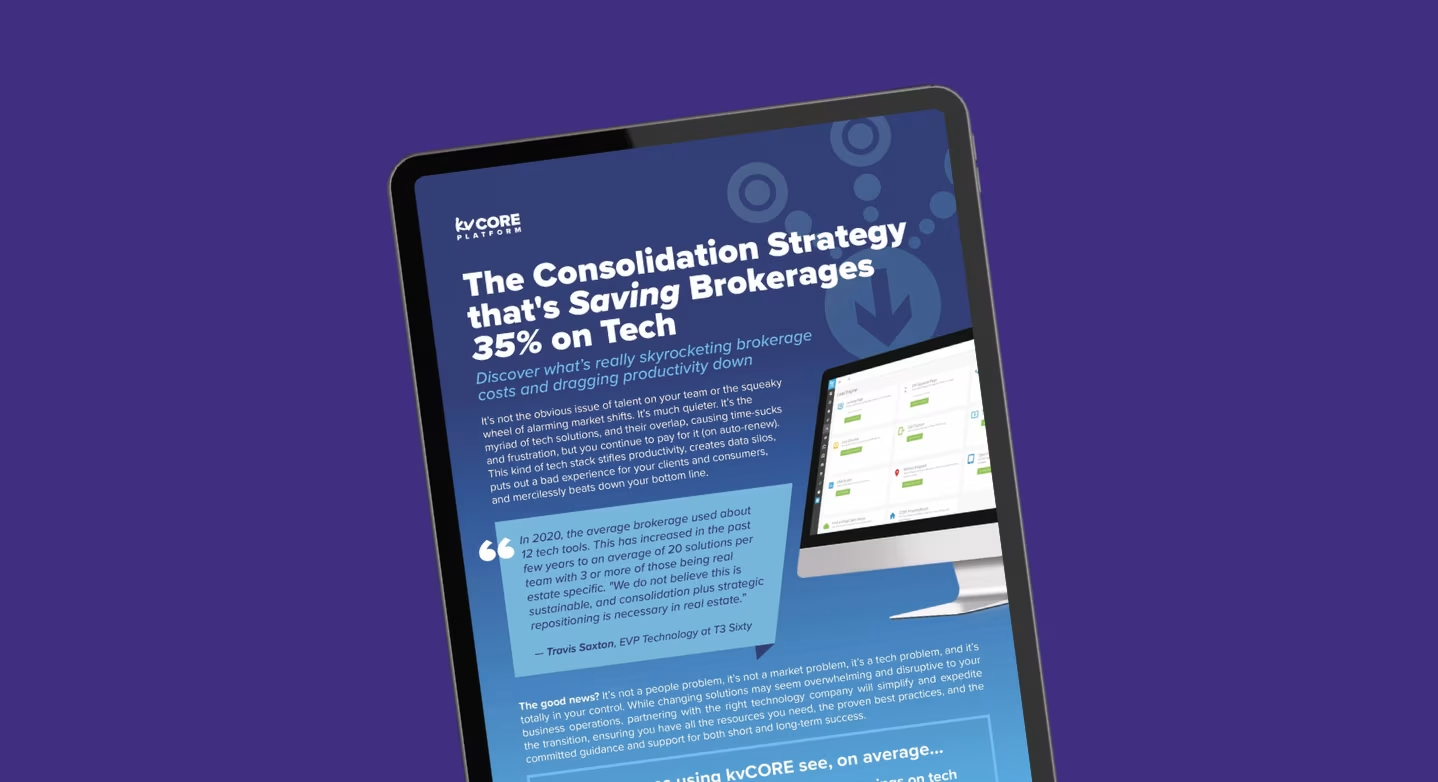
It’s not your agents’ skills or sudden market changes that are quietly eroding your bottom line. The real culprit is hiding in plain sight: your tech stack.
If you’re like most real estate brokerages today, you’re juggling around 20 different software solutions—up from just 12 in 2020. Each one seemed essential when you signed up, but now they’re creating a web of inefficiencies that’s costing you far more than their monthly fees.
These overlapping tools create data silos, frustrate your agents with multiple logins, and deliver a disjointed experience to your clients. The result? Decreased productivity, increased costs, and lost opportunities.
But here’s the good news: this isn’t a people problem or a market problem—it’s a tech problem, and it’s completely within your control to fix.
Why Most Brokerages Are Drowning in Technology Tools
The Tech Explosion in Real Estate
The numbers tell a stark story. According to Travis Saxton, EVP Technology at T3 Sixty, the average real estate team now uses 20 different solutions, with at least three being real estate-specific tools. This represents a 67% increase from 2020 levels.
“We do not believe this is sustainable, and consolidation plus strategic repositioning is necessary in real estate,” Saxton warns.
The Real Cost of Tech Sprawl
When brokerages spread their operations across dozens of platforms, they face:
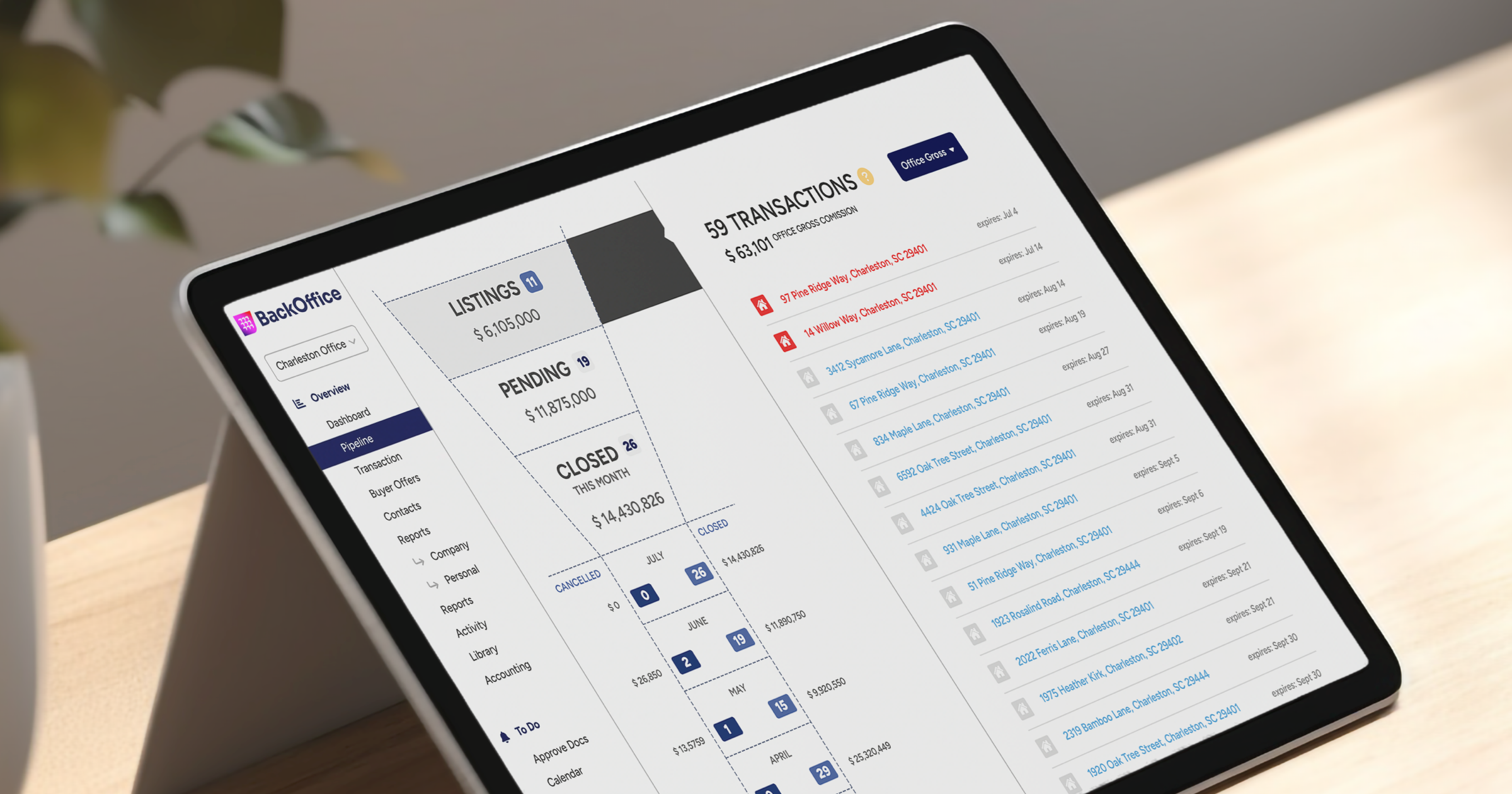
See BoldTrail BackOffice in Action
What Happens When Brokerages Consolidate Their Tech Stack
The 35% Cost Reduction Reality
Brokerages that have consolidated their technology into integrated platforms like BoldTrail are seeing dramatic improvements:
Six Key Benefits of Technology Consolidation
1. Streamlined Business Operations Instead of managing separate tools for CRM, lead generation, marketing automation, transaction management, and reporting, everything operates within one complete platform. This means your data flows seamlessly between functions without manual intervention.
2. Unified Front and Back Office Communication When your client-facing tools talk directly to your administrative systems, agents spend less time on data entry and more time serving clients. This integration empowers everyone to work more efficiently with meaningful, up-to-date information.
3. Dramatically Increased Productivity Fewer logins mean less friction. Less duplicate data entry means more time for revenue-generating activities. When agents can access everything they need from one central hub, productivity naturally skyrockets.
4. Enhanced Agent Empowerment Consolidated platforms provide agents with predictive tools and behavioral automation that work behind the scenes. This frees up their time to focus on building relationships while ensuring fast response times and accurate communication.
5. Consistent Brand Experience Instead of clients receiving emails from different platforms with varying designs and messaging, a unified system delivers a professional, consistent brand experience across every touchpoint.
6. Scalable Success Infrastructure A complete tech solution becomes a competitive advantage for attracting and retaining top talent. It provides complete pipeline visibility and creates a premium client experience that generates more repeat business and referrals.
How to Evaluate Your Current Tech Stack for Consolidation
Signs You Need to Consolidate
Ask yourself these questions:
If you answered “yes” to most of these, consolidation could significantly impact your bottom line and team productivity.
What to Look for in an Integrated Platform
The ideal consolidated solution should offer:
Making the Transition: What to Expect
Overcoming Change Resistance
While switching technology platforms may seem disruptive, partnering with the right technology provider simplifies the process. Look for companies that offer:
Timeline and Implementation Strategy
Most successful consolidation projects follow this pattern:
Assessment phase (1-2 weeks): Audit current tools and identify consolidation opportunities
Planning phase (2-3 weeks): Design your new integrated workflow
Migration phase (2-4 weeks): Transfer data and set up new systems
Training phase (2-3 weeks): Get your team comfortable with the new platform
Optimization phase (ongoing): Fine-tune processes and maximize platform benefits

Key Takeaways: Why Tech Consolidation Is Essential for Modern Brokerages
The real estate industry’s technology landscape has become unsustainable. With the average brokerage now managing 20 different software solutions, consolidation isn’t just a nice-to-have—it’s a competitive necessity.
Brokerages that consolidate into integrated platforms see immediate benefits: 35% cost savings on technology, 70%+ adoption rates, and dramatically improved productivity. More importantly, they create better experiences for both agents and clients, leading to increased retention and referral business.
The key is choosing a platform that unifies your front and back office operations while providing room for growth and customization. When your technology works together instead of against each other, your entire organization operates more efficiently.
Tech Consolidation for Real Estate Brokerages: Quick Reference
Q: Why is tech sprawl costing brokerages money and what’s the problem?
A: Real estate companies commonly use 15-29 different technologies in their tech stacks, creating data silos, wasted time switching platforms, training complexity, and overlapping subscription costs. Research shows firms leveraging intelligent software report up to 52% increased productivity through streamlined workflows (Paperless Pipeline, 2025). Consolidation solves this by unifying Front Office (CRM, marketing, websites) and BackOffice (transactions, commissions, accounting) into one ecosystem, eliminating redundant tools and manual data transfer between systems.
Q: How much can consolidation save and what ROI timeline should I expect?
A: According to Buildium survey data, 84% of managers report significant time savings on daily tasks and 63% cite cost savings as a key benefit. Savings come from eliminating multiple subscriptions (often $500-2,000+ monthly), reducing manual data entry, and cutting training time. Most brokerages see immediate operational improvements—fewer logins, automated workflows, centralized data—with financial ROI typically realized within the first quarter as redundant subscriptions are canceled and staff productivity increases.
Q: What are the key benefits of consolidation beyond cost savings?
A: Seamless data flow between systems eliminates manual entry errors and duplicate work. Unified platforms drive higher adoption rates because agents use one system instead of juggling multiple logins. Marketing automation can drive up to 10X more engagement compared to manual outreach. Real-time visibility across transactions, commissions, and agent activity enables faster decision-making. Cloud-native infrastructure scales without adding complexity or requiring additional tools as your brokerage grows.
Q: What should I look for in a consolidated platform and can it replace all my tools?
A: Core requirements include Smart CRM with lead management, marketing automation for campaigns and alerts, transaction management with e-signatures and checklists, automated commission calculations supporting complex splits, accounting integrations (especially QuickBooks), mobile access for agents in the field, and real-time analytics for performance tracking. Platforms should consolidate at least 3-4 essential tools while offering marketplace integrations for specialized needs. Look for 4+ star ratings and proven user adoption across thousands of brokerages.
Q: What’s the typical implementation timeline and how do I overcome team resistance?
A: Implementation typically takes 6-12 weeks depending on brokerage size and complexity. Best-in-class platforms offer dedicated migration support, role-based training programs, and hands-on optimization sessions. The key to adoption is demonstrating immediate value—when agents see consolidated logins, automated tasks, and centralized information in week one, resistance drops dramatically. Award-winning platforms (like G2’s “Fastest Implementation” recipients) streamline this process with proven methodologies and responsive support teams.
Q: How do I know if consolidation is right for my brokerage and what’s the first step?
A: Consolidation makes sense if agents currently switch between 5+ platforms daily, staff manually transfer data between systems, or you’re paying for overlapping functionality across multiple subscriptions. Platforms serving 400,000+ real estate professionals with 4.5/5 star ratings demonstrate proven reliability at scale. Key indicators you’re ready: mounting subscription costs, data inconsistencies between systems, low agent adoption of current tools, or difficulty scaling operations. Modern platforms with AI features, comprehensive integration, and cloud infrastructure provide the foundation for efficient growth in 2026.